Walk in the Park (Dynamo)
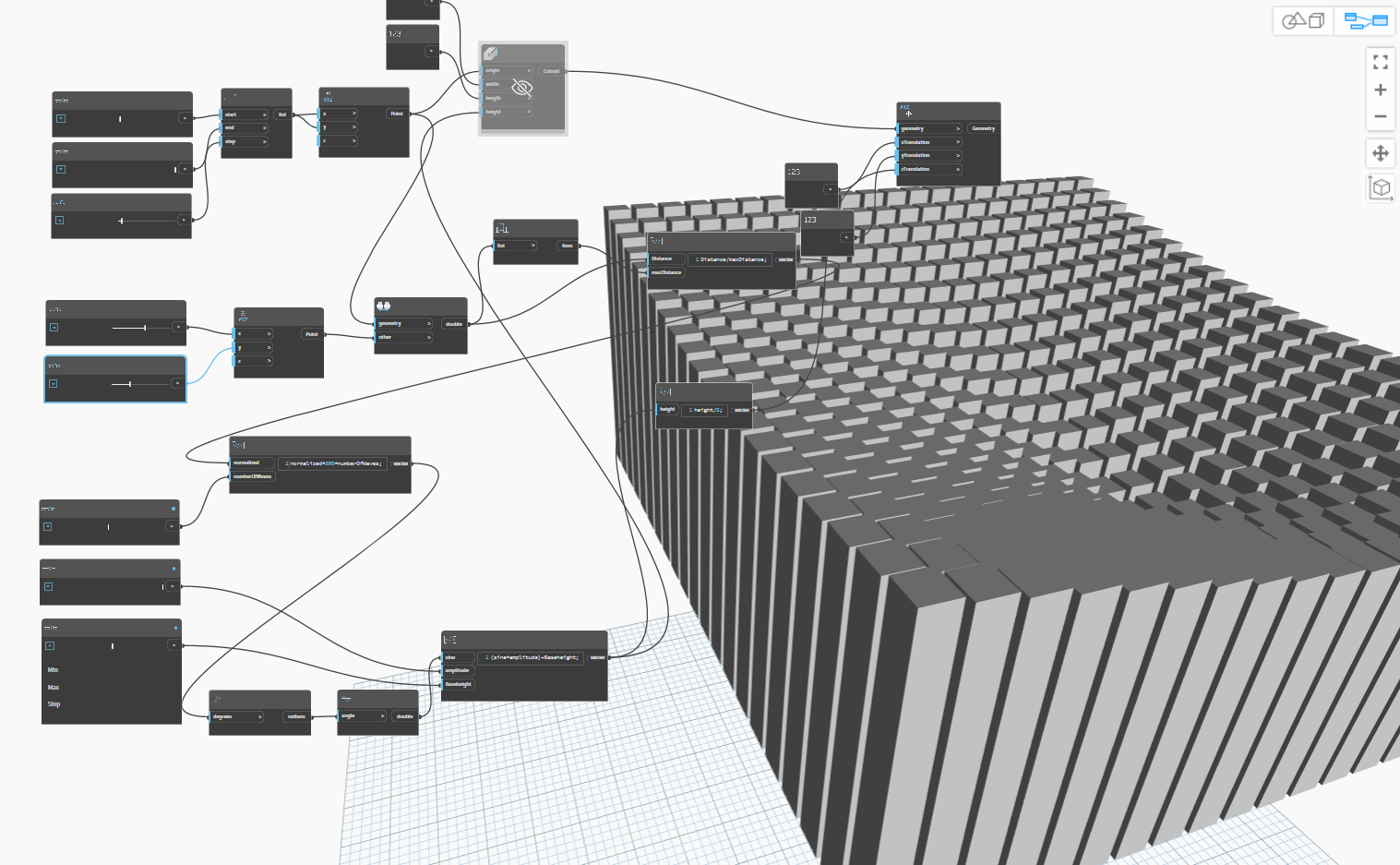
In this model, I created a grid of points and generated cuboids to represent ground surfaces. I used an attractor point to control the height of each cuboid based on its distance, applying a sine function to create a ripple-like effect. The heights were then adjusted so that all cuboids aligned at the same base level. This helped me understand how distance-based logic and mathematical functions can be used to generate dynamic terrain-like patterns.
Eliminate the Echo (Grasshopper)
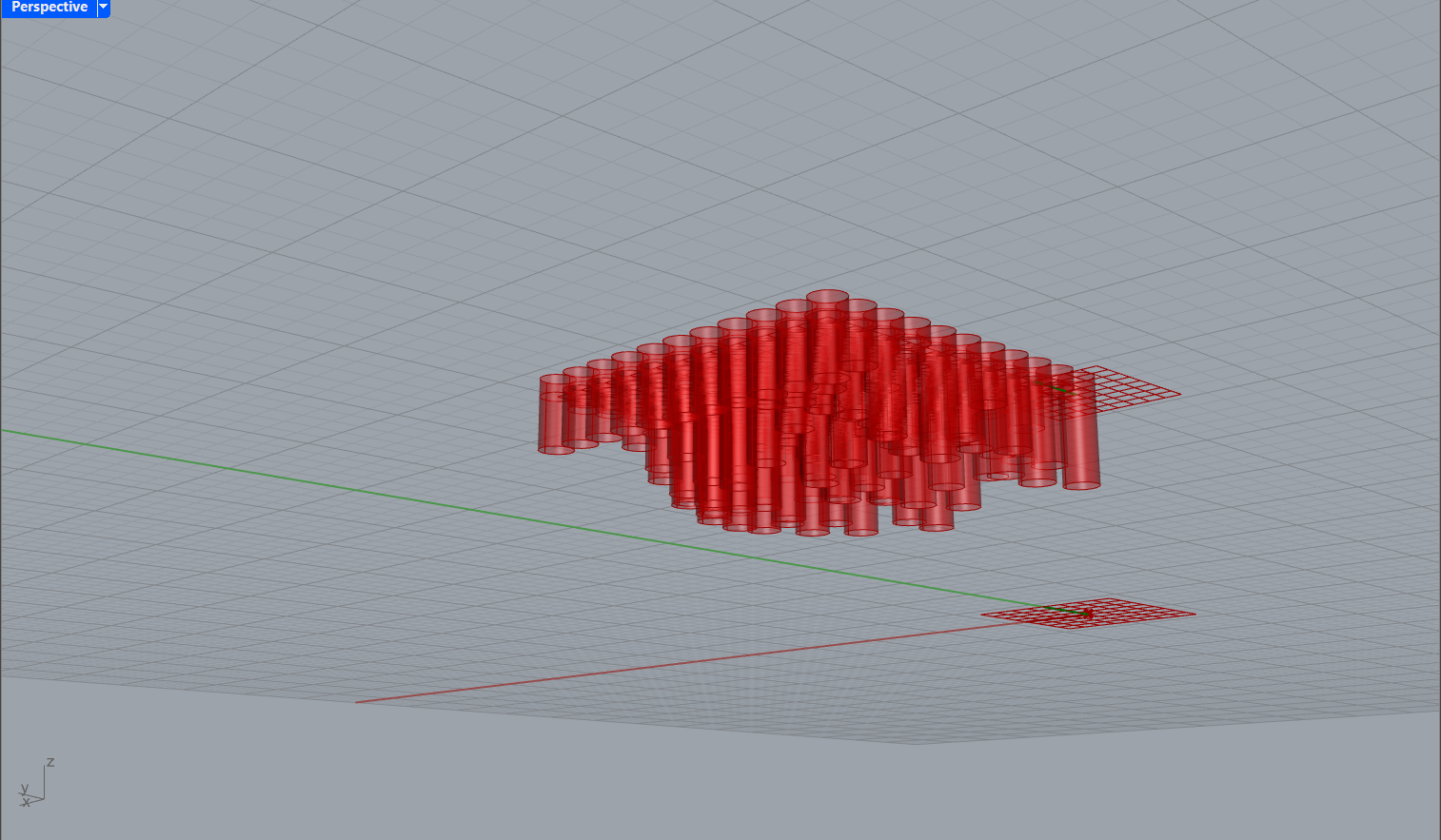
In this assignment, I developed a grid of cylindrical elements at the ceiling level and used an attractor point to control their heights. By computing distances and applying sine wave logic, I created a ripple effect across the ceiling. I used non-uniform scaling in the Z direction to control the cylinder lengths. This exercise helped me understand how parametric relationships and mathematical functions can be used to simulate performance-driven design, especially in acoustic-inspired forms.
Happy Facade (Dynamo + Revit)
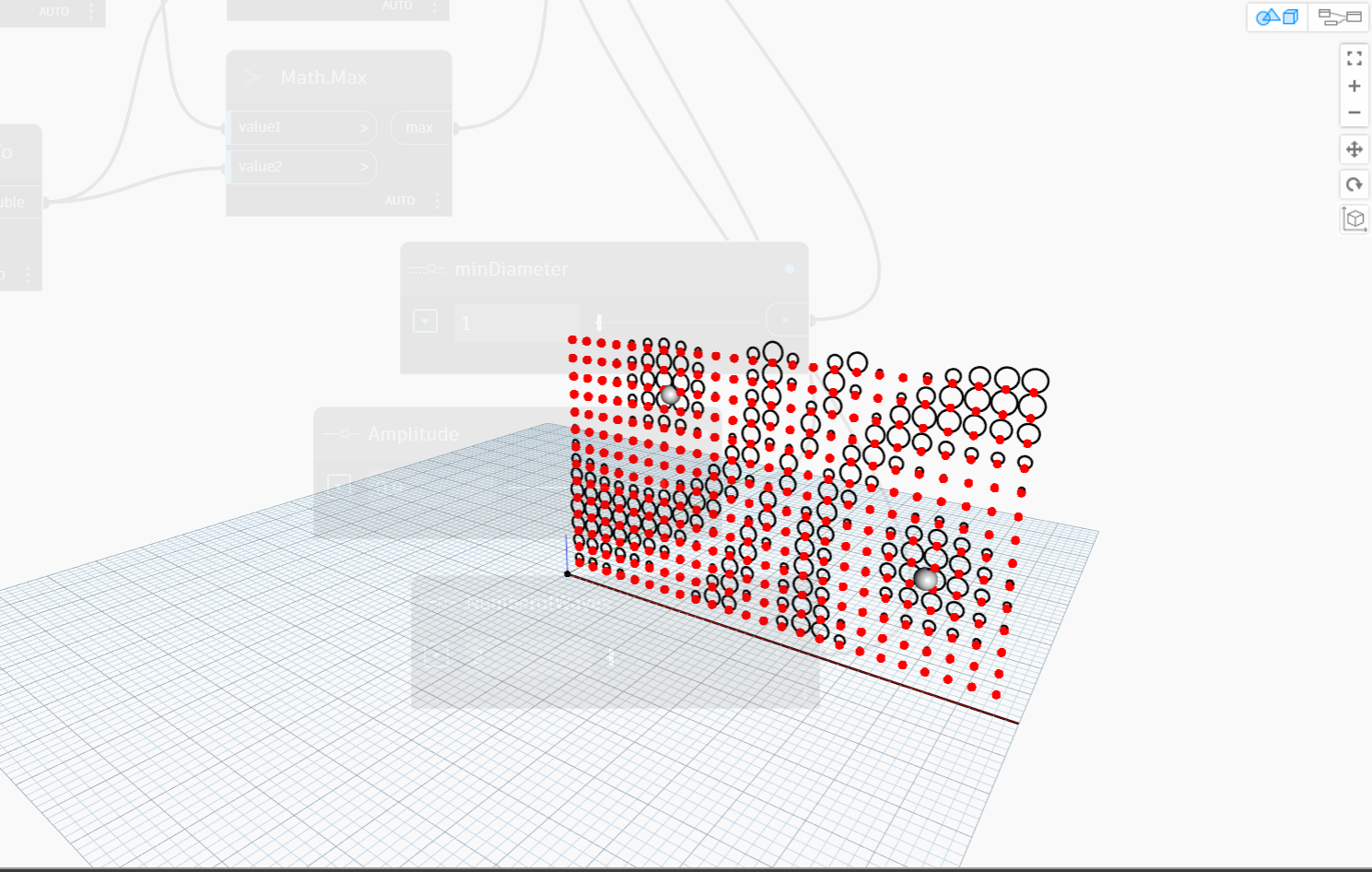
This assignment was particularly interesting because part of the script was already created, and the task was to build on top of it. Instead of starting from scratch, I had to understand the existing nodes and logic before adding attractor-based behavior. I computed distances from multiple attractor points and used the minimum distance to control the diameter of circular openings using a cosine function. This experience helped me think more critically about working with existing scripts and modifying them effectively, which feels closer to real-world workflows.
Link for the module
https://acc.autodesk.com/build/files/projects/ef862b37-e023-4ef6-8ec3-3615621538bf?folderUrn=urn%3Aadsk.wipprod%3Afs.folder%3Aco.dcVZfWZuQNi1mzX3a2DP9A&viewModel=detail&moduleId=folders