Stage 1
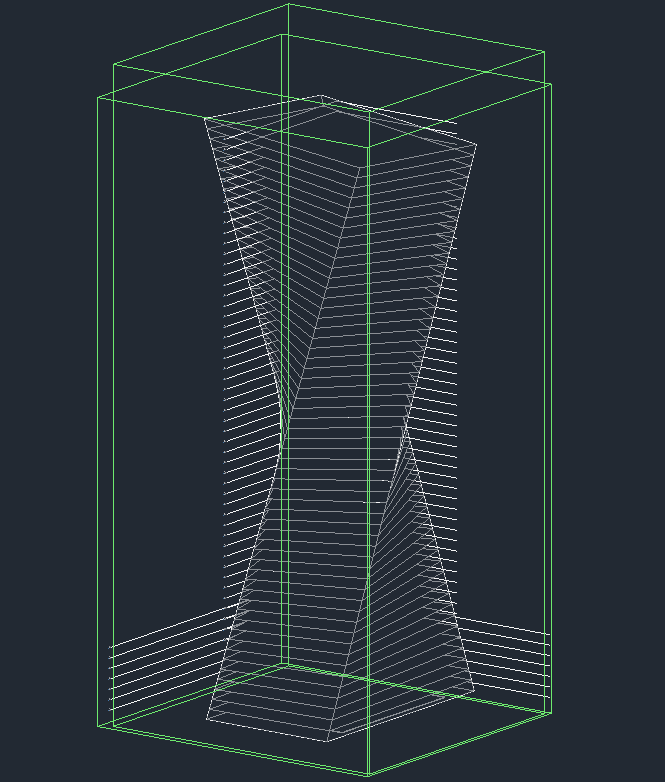
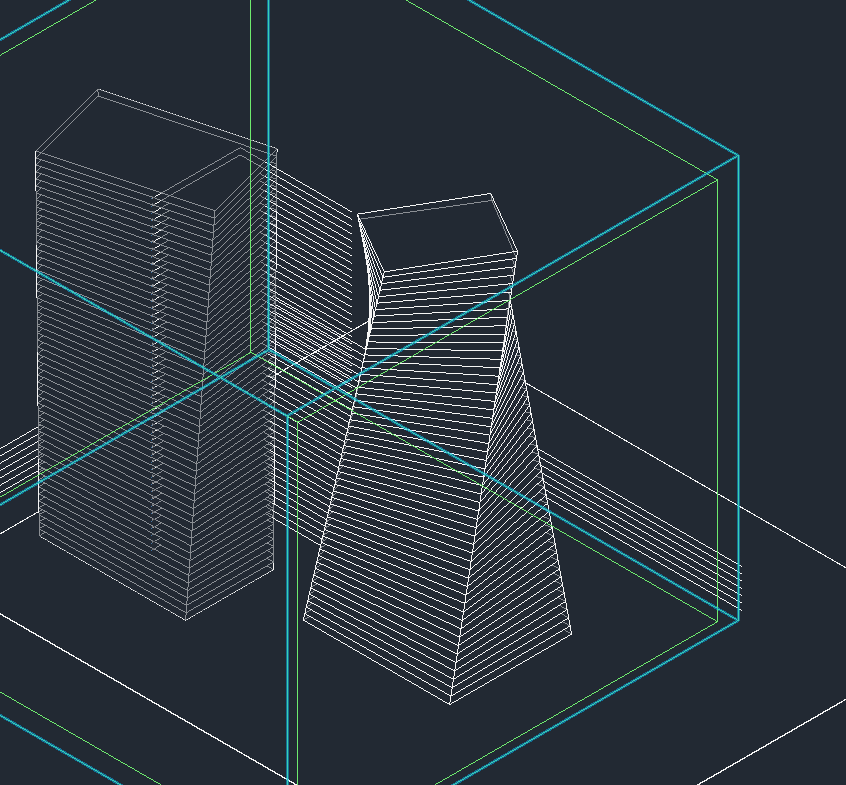
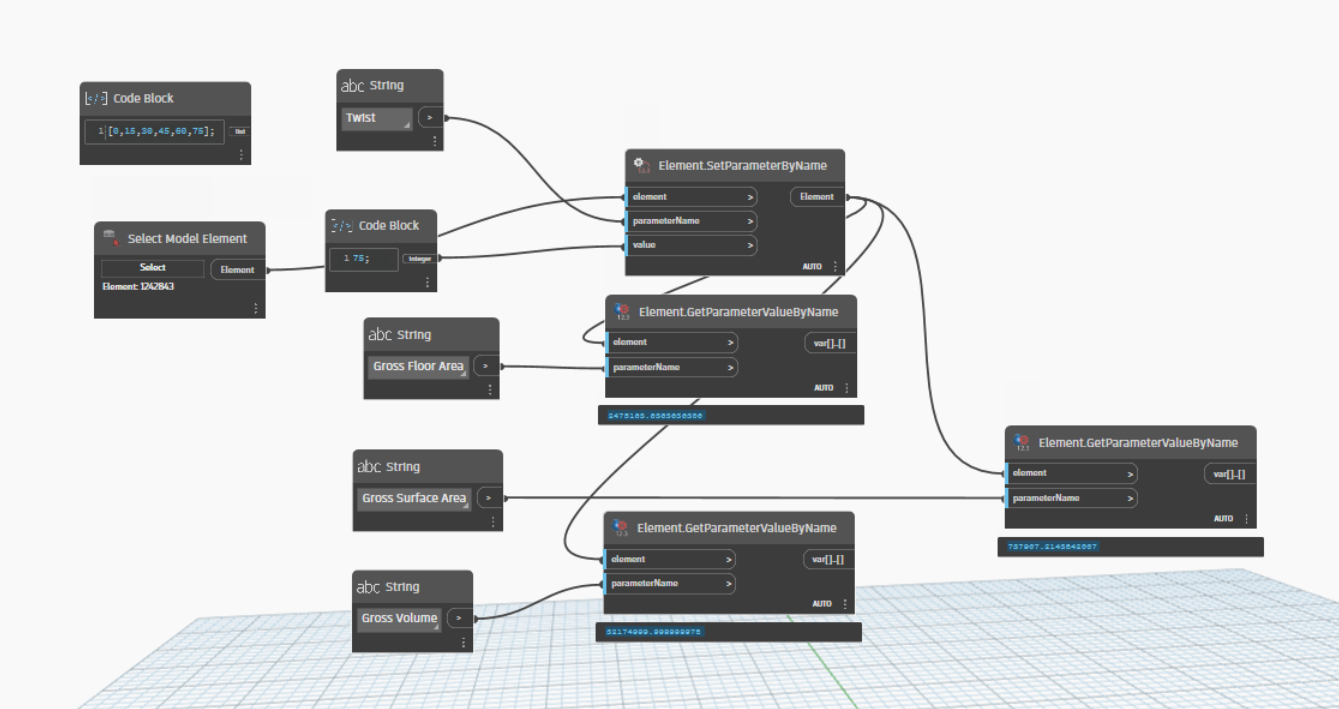
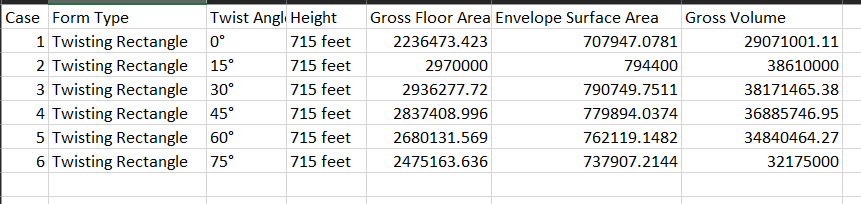
For Stage 1, I explored high-rise tower forms using Revit conceptual masses and tested how changing a single input parameter affected the overall building performance. I used a twisting rectangular tower form with a constant building height of 715 feet and varied the twist angle from 0° to 75°. As the twist angle increased, the tower developed a more dynamic architectural expression while also affecting the gross floor area, envelope surface area, and gross volume.
The testing process helped me understand how a single geometric parameter can significantly influence both the appearance and efficiency of a high-rise form. Lower twist values created simpler and more efficient forms, while higher twist values produced a more iconic shape but increased envelope complexity. Through this exercise, I learned how parametric control can quickly generate multiple design alternatives and support early-stage form evaluation.
Parameters Used to Flex the Form
- Twist Angle (0°–75°)
- Building Height = 715 feet
- Rectangular floor plate dimensions
Point to Ponder-From the Stage 1 testing, I observed that increasing the twist angle reduced the overall efficiency of the building form because the envelope surface area increased while the usable floor area slightly decreased. However, higher twist values created a more visually interesting tower. I found that a moderate twist angle provided a good balance between efficiency and architectural quality.
Stage 2
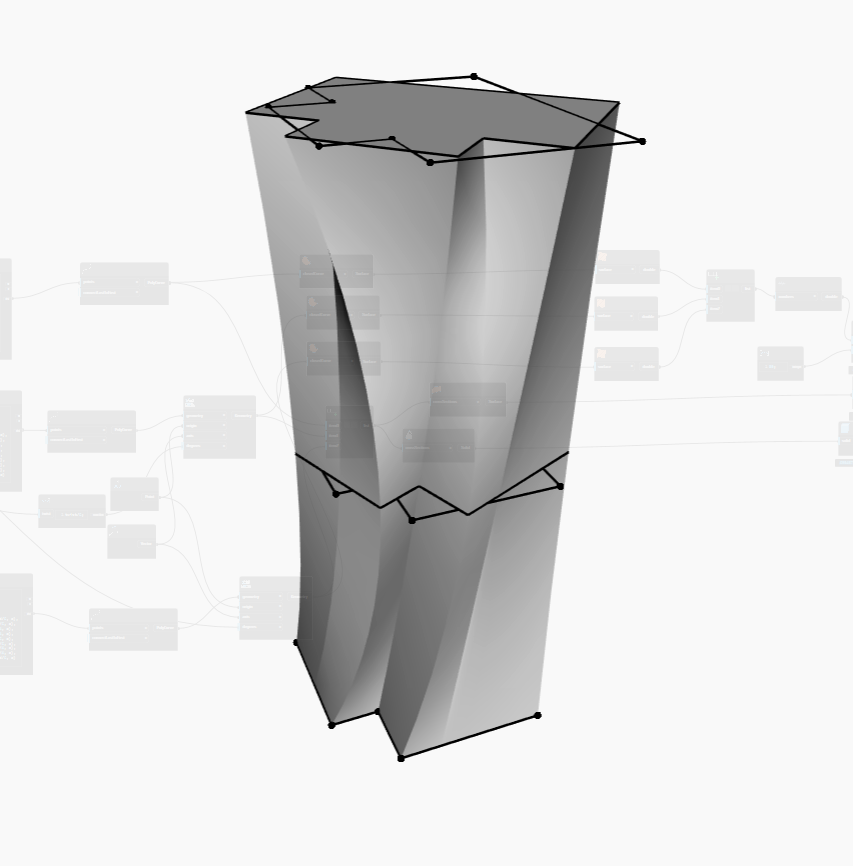
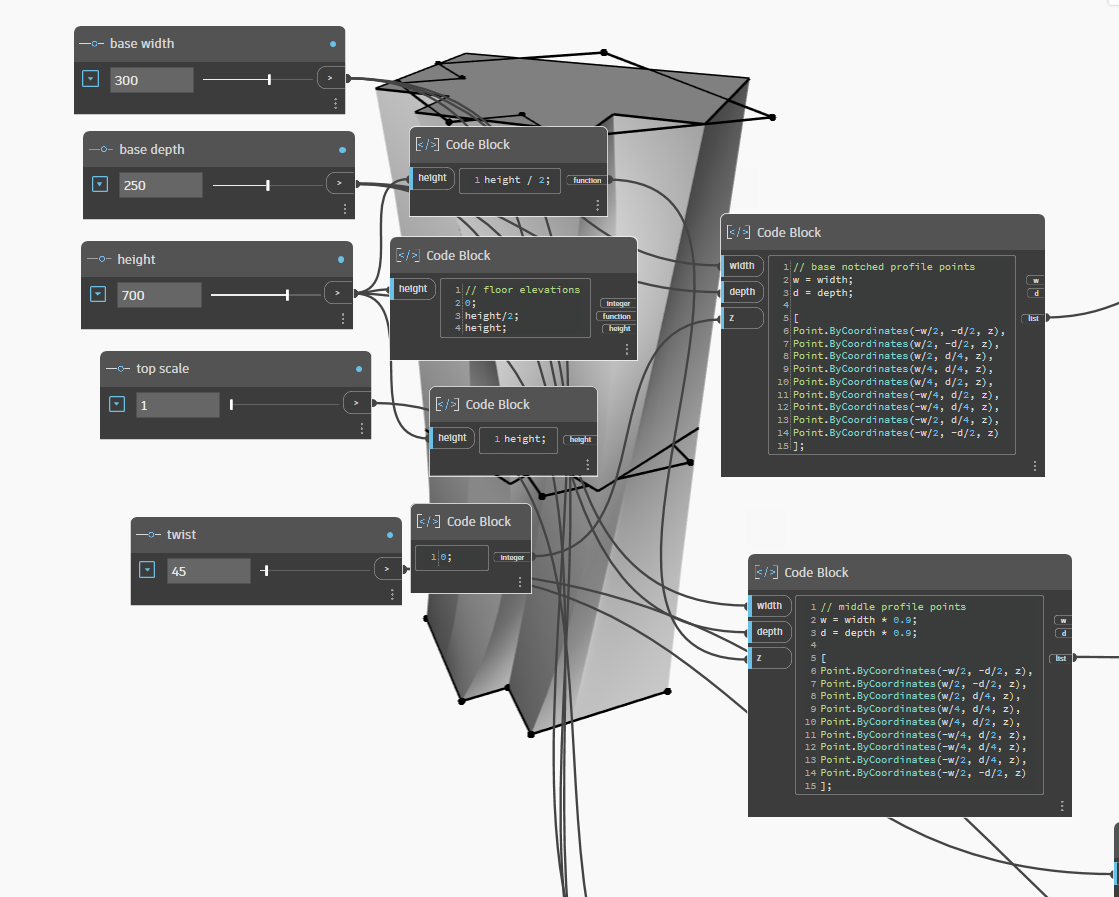
For Stage 2, I created my own original high-rise building form directly in Dynamo instead of using Revit conceptual masses. The tower was generated using parametrically controlled floor profiles that were lofted together to create the final building geometry. I developed a twisting tapered tower form where the geometry could dynamically change using two input parameters: Top Scale and Twist Angle. The building height was maintained at 715 feet throughout all test cases.
The Top Scale parameter controlled how much the upper floor plates tapered relative to the base, while the Twist Angle parameter controlled the rotational transformation applied to the tower as it rose vertically. By adjusting these parameters, I was able to rapidly generate multiple design variations and evaluate their performance using Dynamo.
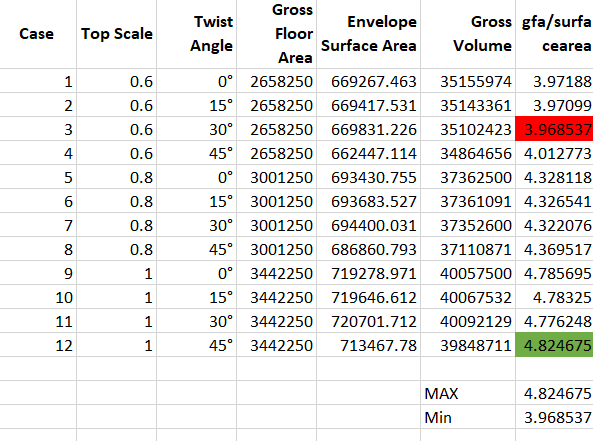
I tested twelve different combinations of Top Scale and Twist Angle values. The results showed that increasing the top scale increased the gross floor area and gross volume, while increasing the twist angle generally increased the complexity of the building envelope. Dynamo allowed the evaluations to run much faster than Revit conceptual masses and made it easier to compare multiple alternatives efficiently.
Parameters Used to Flex the Form
- Top Scale = 0.6, 0.8, 1.0
- Twist Angle = 0°, 15°, 30°, 45°
- Building Height = 715 feet
Point to Ponder -The parameter that had the biggest effect on the desirability of the building form was the Top Scale because it directly influenced the usable floor area and overall building volume. A larger top scale created a more efficient tower with higher floor area, while a smaller top scale produced a more tapered and visually dramatic form. The Twist Angle mainly affected the architectural appearance and envelope complexity. I found that a moderate twist angle combined with a medium top scale created the best balance between efficiency and aesthetics.
Stage 3
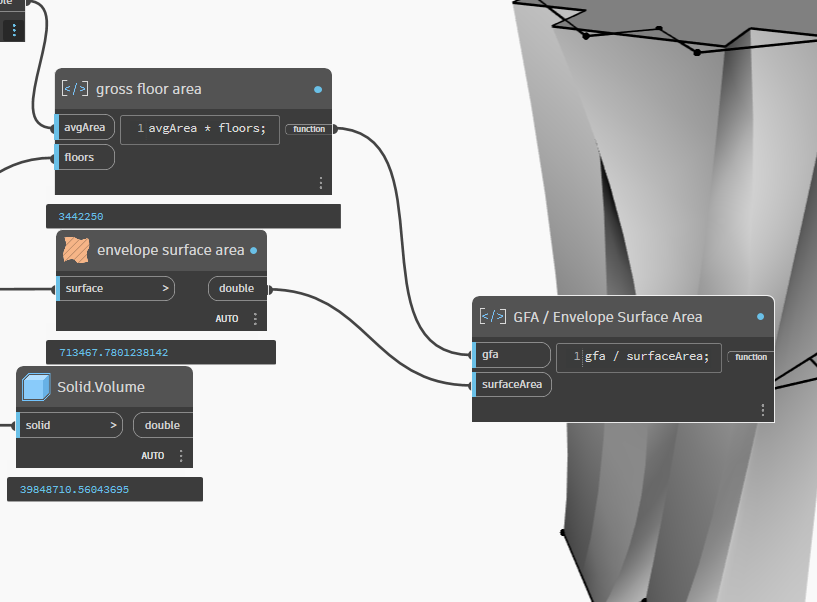
For Stage 3, I summarized the performance data from all twelve test cases and added an additional evaluation metric:
Gross Floor Area / Envelope Surface Area
This metric helped compare how efficiently each building form generated usable floor area relative to the amount of exterior envelope required. Higher values indicated more efficient forms because they produced more usable space with less façade surface area.
From the results table, the maximum value of the metric was approximately 4.8247, which occurred for the case with:
- Top Scale = 1.0
- Twist Angle = 45°
The minimum value of the metric was approximately 3.9685, which occurred for the case with:
- Top Scale = 0.6
- Twist Angle = 30°
The testing demonstrated that larger top scales generally produced more efficient forms because they increased usable floor area significantly. Smaller top scales reduced the efficiency because the tapering reduced floor area while still maintaining a relatively large envelope surface area.
Point to Ponder – Although the form with the highest metric value was the most efficient mathematically, I would recommend a more balanced option to the developer rather than simply selecting the maximum-performing case. I would recommend the building form with:
- Top Scale = 0.8
- Twist Angle = 30°
This option creates a strong balance between performance, constructability, and architectural identity. It maintains a good level of efficiency while also creating a more dynamic and visually distinctive high-rise tower appropriate for the Dubai skyline. The moderate twist and taper create a recognizable form without introducing excessive façade complexity.