
‣
- Office hours this week
- Design Journal Self-Check Recommended
- Catch-up Plans
‣
- Fast Thinking & Slow Thinking
- Fast Thinking Basics (Dynamic Memory Stack, Active Recall, Waggle Dance, Associative Architecture)
- WHAT DID YOU EAT FOR BREAKFAST?
- Recent memory
- How fast was it?
- WHAT IS THE SQUARE ROOT OF 49?
- Learned, Practiced
- Long-term memory
- (True) Fact; change usually not required
- How fast was it?
- WHAT IS YOUR FAVORITE COLOR?
- Used key words to do a memory search.
- Probably found a few items that may fit the need & gave a neural signal.
- Responded with the one that had the strongest neural signal.
- How fast was it?
- WHAT DO COWS DRINK?
- Search for connections in memory using key words.
- If really fast-thinking, respond with next word most closely associated with the ky words.
- Opens opportunity for creativity & un-expected ideas.
- How fast was it?
‣
‣
‣
‣
‣
‣
- Use non-leading questions that demonstrate your neutrality on the topic. ie, not Agree/Disagree, but where the respondent stands from neutral.
- Primarily use close-ended questions so activity is not time-constrained. In general, you should be aware of the options.
- Use open-ended questions only if necessary. If possible, reach for quick & reactionary responses.
- Allow for no response or no opinion in the responses. This is still valuable feedback.
- Aim for 5 minutes maximum in length. Especially for design thinking, emotionally-driven responses give the greater insight.
- Include a few demographic questions so that you can categorize the responses & search for trends.
- If face-to-face interviews, try to get 5 or more. For an online survey, try to get 15 or more responses. These targets will be higher for the Design Projects 2 & 3.
- CCP & PoV still in flux
‣
‣
- Prepare 5 questions for an interview.
- Conduct your interview with a person in your group.
‣
- Create a Google Form Survey with 5 questions.
- Copy-and-paste the survey form url into Slack Design Project 1 channel.
- Click on the survey url for a person in your group.
- Complete the survey.
‣
- What it means to freeze.
- We want to move to ideation.
- Commit to the Freeze model.
‣
‣

‣
- ⚠️ Cautions: Self-editing, Self-Doubt, Peer Pressure
- 🚦 Fast Thinking: Flow, Capture, Speed, Pace, Burst-mode
- Agility
- No (Ideas) Escape
- Quantity, Not Quality
‣
- Spectrum: Normal ↔ Crazy
- Opportunity at Crazy end
‣
- Uniqueness, Un-common Insight
- Opportunity for Innovation
- Competitive Advantage
‣
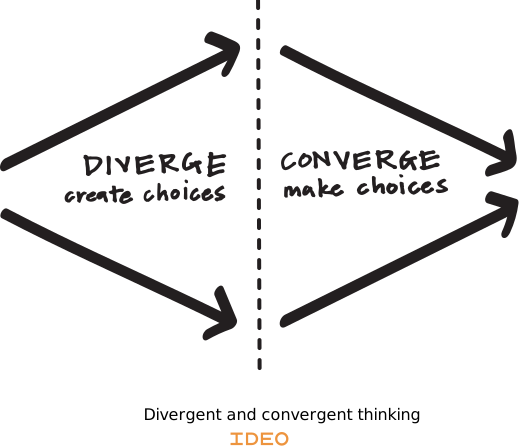
‣
- Sharing the Worldview
‣
- Dealbreakers, Time-Suckers & Other Impracticalities
‣
- Push, Pull, Center, Grow, Shrink & Other Modes of Change.
- Angle of penetration.
‣
‣
- SOLUTION
- OPPORTUNITY
- COMPETITIVE ADVANTAGE
- THE MODEL
- TEAM

‣
- PART A. DEFINING DESIGN JOURNAL CARD
- INTERVIEWS
- SURVEY
- INFOGRAPHIC (WILL WORK ON INFOGRAPHIC IN DESIGN PROJECT 2)
- FREEZE DEFINING
- PART B. IDEATING DESIGN JOURNAL CARD
- Use PostIts to capture as many solution ideas as you can in 120 seconds
- Minimum 10 solution ideas
- Keep number of words per PostIt to a minimum
- Sort from Normal to Crazy
- Repeat, if necessary
- Choose three of the more promising candidate solution PostIts based on creativity, feasibility & reach.
- Expand on the solution idea by listing associated key words. Compose a solution title using key words. Stay within scope of the working problem statement. Be precise & accurate.
‣
‣
‣
Include one paragraph description, one sketch, and the solution title. Maximum 250 words per solution mini-proposal.
‣
‣
‣
- Make a prototype (physical model & sketches) for Testing next class.
- Document the prototyping work in Notion Design Journal.
- List the form & function features that you want tested.